I have been meaning to write this for a while now. There was only one thing holding me back: in all honesty, mentioning the F-word was starting to frighten me.
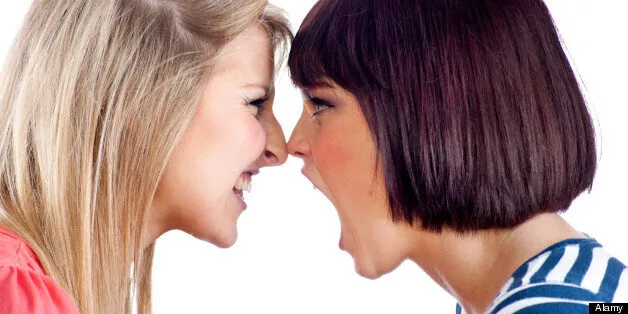
Why was a word that was meant to encapsulate freedom and empowerment slowly becoming an intimidating one, making me step on keyboard eggshells whenever I wanted to use it? Isn't it ironic to have a word born to encourage gender liberation actually suppressing opinions for the fear of receiving negative commentary or disagreement? What if they say I'm not a feminist? In truth, I've always cared more about what other women think of me.
I don't think we meant it to be this way. But due to the internet explosion of blogs, Twitter and forums, we all have the free tools to tell the world exactly what we think, whenever we want. However the negative side is our own idea of feminism might not align with other online communities and means we are at risk of being scolded for our beliefs. Due to the existence of social variables: small niche groups, media influences, living situations, diverse cultural groups and ever-changing political factors the definition will of course mean something different from woman to woman, person to person. But surely it shouldn't have to be this complicated.
Unfortunately the question appears now to not only be "are you a feminist?" but more "are you a feminist like me?" But, I ask, do the minor details really matter that much? When asking on Twitter "what does feminism mean to you?" every single reply I received was unique. Maybe we don't need one complete definition; if we have the fundamental understanding then we're all on one team, right?. Moreover, some replies mentioned bad experiences what other people thought of them. Culture editor Victoria Finan said: "Feminism is the right to define one's gender oneself and to expect equality, if you ask me anyway. I once got told I wasn't a feminist, as I don't believe in raising gender-neutral children. It really upset me."
In my opinion, we need not concentrate on the nitty gritty definitions but on the collective empowering want and need for equality and the death of sexism.
It appears the biggest insult today used to be judging a woman on her aesthetics, intelligence or career. But we have a new winner: branding someone 'not a feminist'. Where's the girl-power in that?
We only have to see the backlash certain celebrities received when stating they 'weren't feminists'. Such as Katy Perry who said "I'm not a feminist but I believe in the strength of women," when awarded 'Woman of the Year' in her Billboard acceptance speech. This sounds like an oxymoron, and maybe it is. To me "believing in the strength of women" is the bit to concentrate on here instead of dismissing her views entirely without checking that she may not want to use the F-word for her own reasons.
Of course there was also the controversy with Carla Bruni-Sarkozy claiming not to be a feminist: "I imagine I am if feminism means claiming one's freedom. But I am not if it means being committed in an active way to the fight that some women are still leading today I admire their bravery a lot, but I have chosen to commit myself elsewhere". On further dissection, she is saying she is a passive feminist. She is not saying it's wrong, or she is wildly against it. Yet people jump at the 'not a feminist' part of the story and tar her with a brush similar to that of the Salem Witch trial. Targeting other women isn't the answer to gender equality.
I must admit I started to avoid the F-word completely. I started to just define my views as 'strongly anti-sexist' to make matters easier. To me, helping along my idea of 'feminism' was to do little things everyday that I felt might have made a difference. Such as correcting someone who talks hypothetically about a male CEO, reminding them it could be a 'she' or scorning someone for making gender assumptions ("because I'm a girl") or making jokes about sex, rape, careers and pay differences. I also joined the No more page 3 initiative, a campaign to stop ask Dominic Mohan to take bare boobs out of the Sun newspaper. I believe we can conquer everyday sexism together. I believe women can have it all in the work place. I believe it's possible to stand up for our beliefs with or without one word to define it all. To me, beating everyday sexism is my definition of modern day feminism. Feminism might mean something different to someone else - they might have a different personal focus but really, you want the same thing.
Do I think it's a complicated word? No. To me, Caitlin Moran made that quite clear in her popular book How To Be A Woman; one of my favourite quotes in the book describing feminism had to be "I'm not 'pro-women' or 'anti-men' - I'm 'thumbs up for the six billion". To me this is it - it's describes very succinctly the idea of freedom for all. It's social, political, economical equality. It's the banishing of sexism, however big or small.
Here's what I propose: we all vow to empower other women whilst keeping close our own personal definition of feminism. Here are a few quotes for inspiration:
Rebecca West: "I myself have never been able to find out precisely what feminism is: I only know that people call me a feminist whenever I express sentiments that differentiate me from a doormat or a prostitute". (Mr Chesterton in Hysterics: A Study in Prejudice)
Jane Austen: "He is a gentleman, and I am a gentleman's daughter. So far we are equal." (Pride & Prejudice)
Virginia Woolf: "Women have served all these centuries as looking glasses possessing the magic and delicious power of reflecting the figure of man at twice its natural size." (A Room of One's Own)
Zooey Deschanel: "We can't be feminine and be feminists and be successful? I want to be a f**king feminist and wear a f**king Peter Pan collar. So f**king what?" (Digital Spy)
Caitlin Moran: "If the things that concern you as a modern woman are the bewildering rise of the Brazilian and the pressure to have a baby then start your feminism there!"(Caitlin Moran's Guide to being a modern feminist, Stylist)
Mary Wollstonecraft: "My own sex, I hope, will excuse me, if I treat them like rational creatures, instead of flattering their fascinating graces, and viewing them as if they were in a state of perpetual childhood, unable to stand alone." (A Vindication of the Rights of Woman)
Share your definition of modern day feminism in the comments below.