
If we, as a society, deem climate change the greatest threat facing humanity and that urgent action is needed to limit our CO2 emissions, then printing money to achieve that aim need not be inflationary because there is corresponding work associated with it, creating sustainable growth and boosting GDP.
In recent months there has been a renewed look at the idea of a financial carbon bubble, or unburnable carbon reserves. Most recently, a report from The Carbon Tracker with a forward by Lord Stern of the Grantham Research Institute on Climate Change (London School of Economics), argued that serious risks are accumulating for investors in high carbon assets, such as coal mining companies and the oil and gas industry.
Our banks are as safe as houses. No, something stronger: our banks are as safe as...banks. Do not be afraid citizens of Britain, your cash is safe. That is the message from the banks and the government. Simply deposit your wages and your savings with us and we will treat your money with the good practice and deference for which the City of London is famous, they say.
Renewable technologies represent one of the few ready and easily deployable solutions to the energy challenges we face. But as those challenges increase in years to come, what would happen if we didn't turn to that technology to meet them? What would the wider impacts be if we failed to replace the finite fossil energy sources which sustain our very way of life?
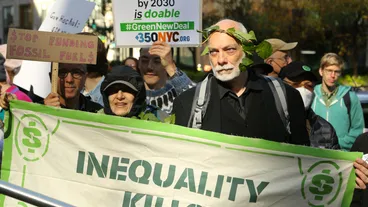
The principle at stake here is the future of our planet. The future of our climate, and the future of the freedom to protest and voice dissent in Britain. Once, these activists were the Suffragettes, imprisoned and force-fed for refusing to give up their fight for the right to vote because they were women.
The UK government's decision to resume fracking has been welcomed by the oil industry, and widely lambasted by environmental campaigners. But to a large extent the debate about the potential of shale gas in this country has completely missed the point.
This was meant to be a blog about Waitrose's relationship with fossil fuel giant Shell (Waitrose had been considering plans to open up shops in Shell petrol stations across the country), calling on Waitrose to end their partnership with the mass polluter. But Waitrose must be mind-readers because on Wednesday they did just that.
An analysis published last year by the Organisation for Economic Cooperation and Development and International Energy Agency found that gas, oil and coal companies in the UK have been receiving more than £3 billion a year in the form of tax breaks and other incentives for production and consumption.
One of the biggest secrets of the current UK recession is that there is one sector which is booming. Strangely this sector is often perceived as at odds with economic growth, holding back industry and a luxury we can't afford with the nation's finances in a slump. This booming growth sector is the green economy.
As the public debate on securing our future energy needs continues to heat up, one thing is certain. Kicking the fossil fuel habit will be hard. Over two billion people in the developing world need more energy. Even with major improvements in energy efficiency and huge growth in alternative energy, fossil fuels will be the dominant source of energy in mid-century.
Imagine a future where you simply press a button to have your own personal railway car waiting, day or night, to whisk you off at many times the speed of a car. And environmentally friendly, too! This is what we are designing in the 'RailCab' project.
Ofgem's figures show that the current cost to UK households of developing all forms of renewable energy, including wind, is less than £20 a year. For less than 40p a week, we can develop a thriving UK-based renewable sector, including wave and tidal energy, which will provide secure, cost-effective and clean energy for generations to come.