By international standards, Iran's election is not free and fair. Candidates are vetted by the Guardian Council and all democratic, liberal, secularist, left-wing and women candidates are banned. The media is censored. There is no open political debate. Dissenting opinions are suppressed and liable to result in arrest.
In the days leading up to G8 there have been a series of focused campaigns, initiatives and events designed to raise awareness of specific policy issues which will be up for discussion at the summit. World hunger is one such issue, around which an impressively broad and powerful campaign called Enough Food For Everyone IF has mobilised, calling hunger "the great scandal of our age."
I don't think this can be said loudly enough because it should be big news. The UK government has decided to pay compensation to over 5,000 people it tortured and kept in concentration camps in Kenya 60 years ago. It has, however, refused to accept legal responsibility for the crimes committed, or to use the word 'sorry'.
Hassan Rowhani, one of the candidates in Iran's presidential elections set for Friday 14 June, is not the first politician of recent times to have his academic credentials questioned. According to an article in the Daily Telegraph, despite Mr Rowhani revising his official biography there are still queries over the timing of his studies, especially in the light of his political career.
Nabil was just 22 years old when he was sold for a bounty to US forces and taken to Guantanamo Bay. He has been held there ever since without charge or trial. The US has since admitted that he was mistakenly arrested. In 2007 Nabil was cleared for release. Then, in 2009, Barack Obama became President and promised to close Guantanamo Bay. Nabil - like all the detainees - thought that maybe, finally his time had come to be released from his indefinite detention. Instead, the President did nothing.
Despite Putin's immense power (and rumoured vast wealth), he consistently presents himself as a servant of his people - a trick learned from the Emperors of Byzantium. His divorce, announced last week with his wife at his side after seeing a performance of La Esmeralda, was straight from the imperial textbooks.
Turkish Prime Minister Recep Erdoğan has held power for 10 years, during which period his country has experienced unprecedented economic growth and international prestige... Erdoğan has to realize for the sake of Turkey's future is actually the hardest thing for any human being to appreciate - that his own judgment is in danger of being distorted by 10 long years in power.
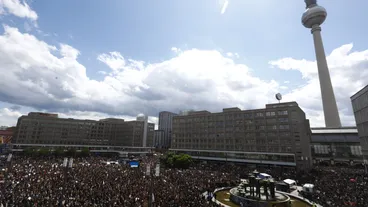
The Gezi Park protests may provide a chance to clear the air about this disaffection. The prime minister's Office urgently needs to find better ways of communicating with the public. Most of all the prime minister needs to start rebuilding bridges with sceptics, who want to know that the government is not above listening to their concerns.
People who say that the Gezi resistance is more than defending a couple of trees are absolutely right. But, do not think this is something new. If it were, it would not rage across Turkey so rapidly. There is a 'Gezi Park' in every city. That's why this movement - which started in İstanbul, spread so easily around the republic.
Hundreds of activists, concerned citizens and media rubbed shoulders within the entrance area of the Grove specifically allocated by Watford authorities to house them. News that David Cameron was to arrive that afternoon was the hot topic of the day and whilst unexpected, the reactions drew major eyerolls, suspicion, scorn and downright anger.
What propels Romania into the category of 'World's First Dystopia' is the massive cyanide mining project that could turn Transylvania, one of the most beautiful and pristine parts of Europe, into a dystopic wasteland. It is also a case study in how corporate PR and marketing can convince a population that the destruction of their ecosystem is in their own interest.