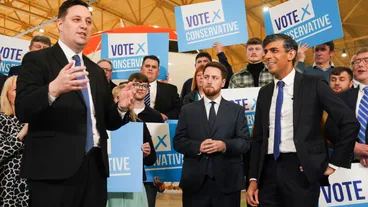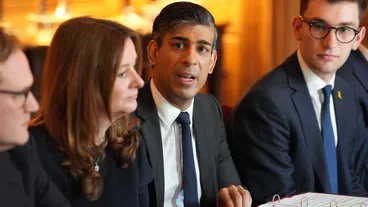
This government is letting down our young people by failing to build a modern education system fit for the modern world.
Conservative strategists who assumed that the leadership question would hand them a decisive advantage at the next elections will be hoping this is a flash in the pan. Here are six reasons why they are likely to be disappointed and why Miliband now has the edge over Cameron.
Leon Trotsky, not someone I usually quote, once said that people may not be interested in politics but politics is often interested in them. British people may be wary of foreign interventions but foreign crises can profoundly affect domestic politics. The suffering that we see every day in Syria won't go away and will have to be addressed, sooner rather than later.
The Conservative Party Conference this week, as with the other two party conferences, was notable for a supreme lack of passion or insight. It seems that, faced with a world order in flux and a rapidly unravelling economic model, our political leaders really just don't know what to do. I for one would prefer it if they just told us this.
Polls continue to show that voters prefer Mr Cameron as prime minister to Mr Miliband, but that they prefer Labour over the Conservatives. That might well change before the next election in 2015, but there is little to suggest that Mr Cameron's grand vision will be sufficient to persuade more voters to back his party.
Labour are using opposition to their advantage, and members are responding to the rallying cries of those in charge. The Conservatives are sticking things out. Government is not proving easy but they seem to be taking people along with them - especially their young members, who could be the campaigning difference in 2015 between a Labour victory and a Labour defeat.
In his conference speech, David Cameron fired the starting gun in the race to win over the aspirational, striving classes. To be the 'aspiration nation' and win a majority at the next election the Conservatives must ensure that they focus this message on those that want to get on, but can't.
It would be sad to see hundreds of years of employment law progress being swapped for £2,000 worth of shares which can be bought back on dismissal 'at a reasonable price'.
The UK government should be asking itself whether it is right to continue protecting the City's gilded elite, whilst putting itself on the wrong side of public opinion.
Despite Cameron exceeding expectations at the podium, he was upstaged by a man who might one day take his place (though of course, he won't overtly admit this): Mayor of London Boris Johnson.
Unlike Cameron - unlike any other Conservative in the last 15 years - the Mayor of London is a winner. To get elected once in a Labour-leaning city is no mean feat. To do so twice is a very impressive achievement indeed (as is not totally cocking the job up in between).
Firms where employees own a chunk of the company simply perform better.
Articulate and confidently executed, Cameron's speech today proved that he is the Prime Minister, not Boris. There is certainly a place for Mr Johnson in the Conservative Party; however, the top job seems firmly in the hands of Cameron at present.
The current law provides lots of protection for a householder acting honestly in self-defence and Chris Grayling's proposals will add nothing new and will only add to the confusion.
Once again stealing the limelight on centre stage, Boris Johnson has lifted the spirit of the Tory party conference and has unsurprisingly hit the headlines whilst doing so. Does he secretly have ambitions of one day leading the Conservatives? Let's see where we are in 2016.
Everyone agrees growth since 2010 in the UK has been very disappointing. But there has been much debate about why - was it cutting the deficit too quickly, was it the spike in inflation resulting from commodity price rises, was it the impact on confidence from the eurozone?