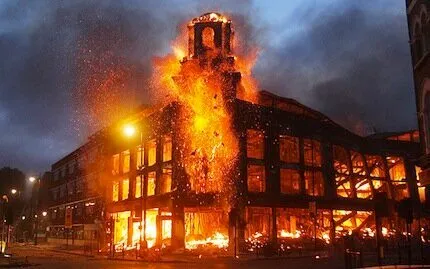
Tottenham riot escalated around 11.30 on Thursday after a handful of youth burnt down two police cars and broke into local shops. Media outlets ignored the initial protest, which was largely peaceful aimed at getting 'answers' for the Mark Duggan shooting. As soon as the protests escalated to a riot, Sky News and BBC covered the events live.
When I spoke to Reni Eddo-Lodge, the president of UCLAN Student Union, she told me "I haven't really read the news," adding that her information was from Twitter and Facebook regarding Tottenham events. Reni has lived in Tottenham for most of her life, and explained "In terms of the media, this simplistic description of what has happened in the community simply demonises it, and doesn't get down to why it has happened," adding that she was "severely unimpressed" with the tabloids coverage.
Another local resident Areeb Ullah described the situation as "heart-breaking" and "It was a combination of issues, many things are affecting young people in this area, including EMA cuts".
Dave who was tweeting from Tottenham last night told me "There were a lot of people who didn't have respect for police" and "It wasn't chaos, or break down of society. I just saw people not caring about properly law. Realising that smashing a window is not the end of world, and they have the power to do that."
Many other people shared similar sentiments about Tottenham, Seline, an activist for Human rights told me that she genuinely believes the protest started peacefully but "escalated by a handful" and went on to add "it was expected because of where they live, it's a run-down area. I wouldn't condone it. It doesn't make the protest look good. And the media will focus on that only".
It didn't take long for other areas to start rioting, but this time around it wasn't about Mark Duggan or public frustration. It was clear riots in other areas had nothing to do with Police brutality but simply misuse of events by opportunists.
Looting broke out in Enfield, and on early Monday morning in Edmonton Green. Guardian journalist Paul Lewis managed to keep up with looters, adding, "This is orchestrated. Teenagers on the streets saying there has long been "a plan" to be at #EdmontonGreen at midnight." Alongside him Mustafa Khalili video-producer for the Guardian tweeted "Young boy stabbed outside Edmonton workingmen's conservative club" in Enfield. Another Journalist following riots on the streets tweeted "At least 200 youths pelting stones + bottles @ police. Businesses told to shut up shop. 2 different cordons" Andrew Hough.
Nick Griffin was quick to turn a spin on events, couple of hours before the riot escalated to Edmonton Green, and Brixton he tweeted "Of course, anything the blacks do will be minor compared to what'll happen if Muslim areas get started".
In Brixton, numerous shops were looted and set on fire, including Footlockers, Currys, and H&M. Couple of hours after looting, it started raining which helped in calming the situation in Brixton, Matthew Taylor tweeted while walking around in the area "Heavy rain in #brixton seems more effective than pol at clearing street."
Several attempts were made in other areas to start looting, including Westfield where masked Youth were seen throwing stones. Unfortunately these events are an indicator of communities breaking down, Youth looting, vandalising and setting fire to local property.