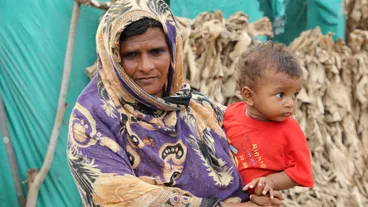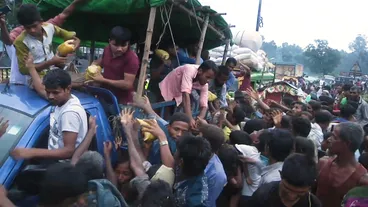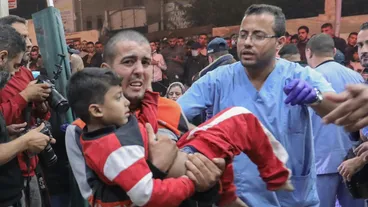
I joined Unicef after about six months of working with the NGO. Being in Unicef gives me the chance to stay in my country, keep a job, and help vulnerable children at the same time. Life here does get lonely sometimes, with my family and friends out of the country. Everyone goes home before sunset and prefers to stay indoors for safety, which leaves no room for social life after work. I go home in the evening and continue working. Power supply is erratic, and water is available only every few days, and only for a few hours.
I have absolutely no interest whatsoever in listening to the head of the Church of England pontificate about banking - I find it totally bizarre! It's like listening to George Osborne's view on wild trout fishing or Abu Qatada's view on last week's episode of Made in Chelsea (For the record, he thought it was 'totes amazing' but also kind of wishes a plague on both their houses).
The latest figures on youth unemployment from the Office for National Statistics - which show the unemployment rate for 16 to 24-year-olds is now more than double that of the wider population, with one in five young people not in employment, education or training (NEET) - paint an extremely worrying picture for today's young people, and those who work with them.
By showing strong leadership and committing its fair share of new money to the Green Climate Fund to help children adapt to the effects of climate change, the UK Government can make sure children everywhere have enough nutritious food to eat, grow up to fulfil their potential and do not pay for our past mistakes with their futures.
If you have never heard of stunting, you are by no means alone. A vast human tragedy, it is one of the least reported, least recognized, least understood issues before us. Stunting, caused by chronic under nutrition early in a child's life, blights the lives of some 165million children around the world. It is far more than a problem of inadequate growth/height for these children. It can trap them in a lifetime cycle of poor nutrition, illness, poverty and inequity. Why? Because stunted growth in the first months of a child's life means stunted development of the brain and thus, of cognitive capacity. Permanently.
Children's present and future is impacted upon by their country's economic health... their government's policies and ability to take decisions that work actively to prioritise and protect young people's lives are equally significant. All societies agree in principle that the health and the well-being of children is a priority. But there is a very hard-headed case to be made as well for the priorities that need to be attached to child well-being. If a society neglects its children... then that neglect is associated with a long list of adverse consequences in later life, affecting both the individual, and wider society.
According to Syrian Arab Red Crescent (SARC), there are about 200,000 persons in need of humanitarian assistance in the governorate, but the actual number is expected to have increased recently. People have come from other parts of the country including Homs, Aleppo, Raqqa, Deir Ezzor, Idleb, and Deraa. New arrivals continue to flow into Tartous on a daily basis.
Damned if they do, damned if they don't. For the last seven years I have worked with celebrities, their agents, publicists (and in some cases their mums) to coordinate their support of charitable projects. And while no-one invites condemnation like a wealthy celebrity who does nothing for charity, those who do contribute open themselves up to a whole other raft of criticism. The big difference is once you're famous, you'll be judged. Every move a celebrity makes is up for scrutiny, including the issues that concern them; their politics; their faith; and the charities they choose to support.
I walked around to see how children in Homs are living. In a convent that works with children, situated at the end of a line of fully standing buildings and right before the destruction and rubble begins, I was amazed to find children reading books, listening to teachers, drawing pictures and playing games. The drawings on the walls spoke of smiling faces, waving hands, laughter and messages about the need to forgive. A total contrast to the rubble outside that represents so many battered lives.
While my travels meant I'd heard of the Central African Republic - unlike many people in the West - and I knew of the huge problem of child soldiers in the region, it was truly eye-opening and enlightening to see the situation up close, particularly the brave work of the UNICEF workers risking their lives to negotiate their release. Thousands of children in the country, out of a population of only 5million, have been abducted, tricked or coerced into fighting.