As an activity, journalism cannot and should not be licensed by the state or any professional body, any more than art or political protest should.
We have a Royal Charter that has been approved by every single party in Parliament. It is backed by the mass of public opinion. And it is based on the recommendations of a year-long, judge-led public inquiry of remarkable thoroughness. And now the people who run some of our big newspaper corporations - an industry condemned by that inquiry for 'wreaking havoc in the lives of innocent people' - say they have made a concession towards it.
What business is it of ours if Mr David Sherborne, barrister to the victims of phone hacking and other alleged press abuses at the Leveson Inquiry, stamps his feet, warbles his throat and unfurls his tail feathers to attract a mate? If a relationship is explored during a public inquiry between two counsel on different sides of such a high profile event then there is a genuine public interest in the timing and extent of those rituals.
This is not a story that can be understood from headlines alone, partly because in Britain the headlines have so often wildly distorted the truth. Despite what you may have read, there is no threat by British politicians to interfere with press freedom. There is, however, a powerful consensus for change.
As a practicing lawyer frequently representing a cross-section of victims ranging from A-listers to politicians, while at the same time also having a significant number of journalists and publishers on my client list, I often have to change hats when arguing for press freedom on the one hand, and striving to protect the basic reputational and other rights of the ordinary man on the street on the other.
Liberty's website declares on its home page "Working to PROTECT CIVIL LIBERTIES, and PROMOTE HUMAN RIGHTS for everyone". But does that "everyone" not include journalists?
British journalism often looks impressive from afar, with trusted media organizations like the BBC and Economist springing to mind. Closer up, its im...
The press are in a frightful tizz about their freedoms. They implore the public to come to their aid and save them from the ignominious fate of being tethered by rules and - what are they called? - standards. Yes, that's it: standards.
What do you reckon George Osborne is regretting most about the past week? The loopholes in the latest Budget, or his decision to join Twitter a few hours before he presented it? Twitter isn't exactly the most welcoming of destinations for public figures - it's not exactly the friendliest of places for anyone with more than about 43 followers - but jump on in and you never know, the water might be warm... or shark infested if you're the Chancellor of the Exchequer. If you were feeling in the tiniest bit victimized this week, take just six seconds to browse the memes devoted to Georgie's first Twitter pic and I guarantee you'll feel a whole lot better about yourself.
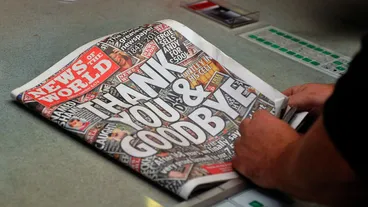
The problem now for Rupert Murdoch, Paul Dacre and the Barclay brothers, who between them control most of the British press, is that the British public have got their number. Most people now know what's been going on and they don't like it. Until recently, Murdoch controlled the government and, disgracefully, sections of the police. At the same time, he and his UK employees repeatedly told us that phone hacking had involved only one rogue reporter. Newscorp, he said, had "zero tolerance" of wrongdoing. We now know that was untrue.
It could hardly be worse. The system of press regulation cobbled together by the Coalition and opposition in the wee small hours on Monday is, to borrow the Leveson jargon, neither voluntary, nor independent, nor self-regulation... to the eternal shame of parliament, we have ended up with a political concoction based on a single judge's recommendations, which may lead to the courts telling editors what to put in their publications. That noise you hear is the applause of dictators around the world.
Given the mixed response to the government's proposed Royal Charter, it seems that the relationship between the press and those in power has not eased. There is still considerable tension between journalists who will forever stand for the rights of press freedom, and those who feel that the industry has swayed too far the other way.
The Leveson Inquiry provided a fascinating, if voyeuristic, catharsis for all those appalled by the excesses of media intrusion into people's lives - most notably the phone-hacking scandals of celebrities and other members of the public. But the resulting press regulation has thrown up a lot of questions - and confusion - over who exactly is to be regulated.
Hypocrisy and hysteria has marked the reactions of whole sections of the press when faced with a challenge to their own power. But remember that it was precisely the abuse of this power that led to the phone hacking scandal, that was uncovered during the Leveson Inquiry, that was mobilised in attacking Leveson's conclusions and that, most recently, has resulted in cross-party agreement for a Royal Charter.
The problem here isn't that the status quo isn't good enough. The status quo, properly implemented, works. If the police failed to investigate and prosecute phone hacking fully, the answer isn't a tougher regulator, it's a tougher police force.
Initial reaction from pretty much every female I know was horror, not so much that the Duchess of Cambridge can't so much as sneeze without someone capturing the moment for posterity, but that if you're going to be photographed in a bikini, you want a tiny bit of warning, and that's even if the picture is only being saved to someone's iPhone, rather than splashed across supermarket shelves the world over.