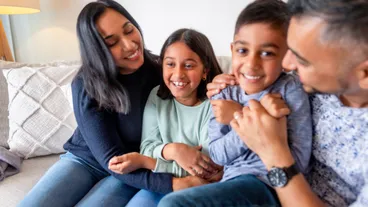
The stormy economic outlook is continuing to bring uncertainty to many households. Big decisions such as whether to send your child to a private school, for example, are not quite as easy to make for many families as they were in more stable financial times.
The analysis of tests undertaken in 2009 has found that on average across OECD countries, disadvantaged students are twice as likely to be among the poorest performers in reading compared to better-off pupils.
Many of the new education policies seem to focus on the short-term rather than long-term. Of course a rational person wouldn't want to defend Gove, but he's right about one thing. Change is needed.
So let's say the royal couple have two children and want to send them both to prep school at seven, followed by five years at a leading public school. Time to start saving? Or at least to ask the grandparents if they've considered downsizing?
As the Head of Sixth Form at Akeley Wood School, which is part of the Cognita group, one of my key roles is to ensure that pupils are making the right GCSE and A Level subject choices.
In recent years, children's reading across all formats from books and magazines to websites has dropped significantly. Our research published last September revealed that only three young people in 10 read daily in their own time, compared with four young people in 10 in 2005.
It's an utter travesty without qualification for a young person in want of a job to be unemployed. But it's equal if not more a travesty to see young people go through education uninformed about the world of work and uninformed about where the job potential lies.
Exciting news reaches us from Southwest London. David Walliams, comedy actor, charity swimmer extraordinaire and children's author, is preparing for a...
This is a measure that at best will be a waste of time, a precious resource in teaching, and could well lower the quality of teaching. I can't imagine a headteacher who values the cohesion of his staff and their goodwill wanting anything to do with this.
There's something to be said for a single application process for all school leavers: UCAS has been gesturing in this direction for a while, with UCAS Progress, which was intended to incorporate all the options from 14 to 19, although so far hasn't included work-based options.
Unfortunately, the label of 'being dyslexic' is often been seen as a negative one. One which can produce upset, limitations and hurdles to a student. However, with the right training, teaching and encouragement it can also produce strengths, talents and creative gifts.
School education is regimented by time constraints, issues of discipline and authority. Whereas, home education is tailored to the needs of the individual child. On the flip side of homeschooling, children's curriculum can be bound by their parent's own knowledge and life experience... The consequence of this may be limited access to work and life opportunities.
When work commitments mean you are tied to the office beyond the end of the school day, an after school club can be a real god send. Of course, after school clubs can vary widely and you need to be confident that your child is getting the very best care at all times.
If this Coalition government really is trying to instil more civic pride and individual responsibility in the public, then there are few more compelling icons of altruistic endeavour than a woman who traipsed half-way around the world to support those fighting in her name. Was she a saint? Not at all, and she herself struggled at times to deflect racial taunts by trying to distance herself from those with darker skin, so she might better fit in.
It's a phrase most people would have heard on a daily basis at work, school, college or university. We all know the process; someone drops a piece of rubbish or leaves a stain or in some cases just flat out cannot be bothered to take their empty sandwich packet to the bin, so of course we will just leave it for the cleaners to deal with.
Excessive tiger parenting? A blight on normal childhood? That really depends on your view of how far structure and tuition affects children's enjoyment of their daily life, and what the benefits might be longer-term.