"He looks haunted," said one of my colleagues, as Tony Blair gave evidence to the Leveson Inquiry. While various commentators have said the former prime minister appeared more relaxed than he'd done during Hutton and Chilcott, there was still something slightly askew about him. Something not quite right.
There has been a lot of discussion at the Leveson Inquiry about the desirability of having a much clearer distinction in our print media between what is news and what is comment. Lord O'Donnell, Alastair Campbell and Andrew Marr have all given their thoughts on this over the past few days and I hear it's already standard practice in America for such a distinction to be made.
The Opposition Front Bench are calling you "complacent and out of touch". (You may not have heard about this, for whatever reason.) Well, it's not just them; it's a growing mood. In fact there's a rumour that "complacent and out of touch" is the motto on your coat-of-arms.
From Friday's revelations at the Leveson inquiry it would appear that the ex-News International boss Rebekah Brooks' contact with David Cameron included giving the PM a lesson on the vernacular of the laity; and in this instance instructing Cameron on contemporary text acronyms.
Poor David Cameron, he's not going to live this one down in a hurry, is he? Forget messing up the budget, turning off women voters, strikes across the country and a dismal showing in the local council elections. His greatest embarrassment right now, and if we dare to speculate, for some time in the future, will be his inability to abbreviate his text messages correctly. In quite possibly the highlight so far of the soap opera that is the Leveson Inquiry, ex-News International exec Rebekah Wade outed David Cameron as so far behind the times he needed advice from a newspaper editor to type his texts correctly.
"We live in a Post-post-Leveson world," he muses, cupping his b*lls. "People expect their journalism to be fresh, healthy, handmade now. We sell ours at journalism markets - truly horrifying f**kfests which take place in Stoke Newington school playgrounds and attract the very worst kind of smug pram-pushing broadsheet reader."
Perhaps, after they have finished dealing with the British media, Lord Justice Leveson and Lord Hunt should offer their combined talents to Islamabad? They might be there a long time.
This week we are likely to see yet more drama and revelations in the sage that is the Leveson Inquiry as the prime minister's former spin doctor Andy Coulson and former Sun editor and horse owner Rebekah Brooks take the stand. You may be starting to tire of the blanket coverage but please don't switch off just yet. There are big issues at stake.
Behind the fever of the current political crisis there is something depressing about the way revelations concerning self-serving MPs and corporate collusion have been reported as 'news'. The past few weeks have shown that power, corruption and lies (aka the blindingly obvious) need to be illuminated in neon lights before the majority of the public take notice.
With Warhol-ian sarcasm, the sly and powerful 81-year-old media mogul told the Leveson Inquiry that he basically has nothing to hide, let alone fear from this farcical tirade against his corporate stranglehold on public opinion.
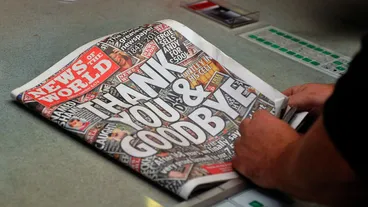
Module One of the judge led Leveson inquiry into the culture, practice and ethics of the British press following the phone-hacking scandal at News of the World, took evidence in Module One of the relationship between the press and the public.
I envy those with a rock 'n' roll constitution. Made of stuff so solid they can cope with a touring schedule this relentless while partying and drug taking into the wee hours with apparently little side effect. I don't know how they do it.
As Rupert Murdoch picked up the bible on his first appearance at the Leveson enquiry (no, it didn't burst into flames), the sharp-eyed might have spotted a hint of a grin on the old man's cadaverous features.
Almost a decade ago I happened to be in a situation whereby I became privy to information which raised a red flag both legally and morally. At the time I didn't realise the extent of its significance and stored it away as a tale perhaps to be recounted one day in my memoirs or a fictionalised account of my experiences of the media world. When the phone hacking scandal first raised its ugly head a few years ago I immediately had flashbacks to those events and alarms bells rang off as to their potential significance. But when the scandal seemed to blow over as quickly as it erupted I didn't give it much further thought.
It's ironic that this week Rupert Murdoch's Sunday Times included a supplement listing the 100 best companies to work for. You won't find his company listed, or any other publisher or broadcaster for that matter.
We need to set the bar a bit higher. A new ethical code would help to define the profession of journalism. This has become ever more important as media platforms converge and more and more new entrants arrive to challenge traditional news suppliers.