As many readers of this blog will know, the UN Secretary General's High Level Panel (HLP) of Eminent Persons on what comes after the Millennium Development Goals (MDGs) expire in 2015 is due to report at the end of May.
In a speech earlier this week, Labour policy review boss Jon Cruddas said that his party is set to consider backing a Swedish-style ban on adverts that target children in the run up to 2015. Very noble, but he might be wise to reconsider; after all, haven't we already decided that such a ban is utterly pointless?
For the Prime Minister to insist that "we would require the agreement of our coalition partners" could be seen as placing politics above principle - an advertisement for self-imposed weakness. The opportunity for David Cameron is visibly to put the country before the coalition. The Prime Minister should offer them an ultimatum.
In sticking to steadfast opposition Miliband won't necessarily look strong and defiant, to many he will look weak and scared. There is a substantial demand for a referendum, and has been for some time.
The Government should be developing a strategy to get as many people online as possible. That means doing something much more energetic in the rural areas as well as helping people to improve their digital skills through training and education.
All the pre-briefing about the Queen's Speech suggested that its centrepiece, its pièce de résistance, would be a new immigration bill. Trumpets sounded. The drum roll played. But by the time the Queen had returned to Buckingham Palace and sent the Crown back to the Tower of London, the government confessed that all they had come up with was a set of three measures that they are considering putting into a Bill that will not even be ready for presenting to parliament until the autumn.
Now the 'send in the clowns' shtick has gone stale, it's now time to send in the 'political has-beens'. If either Michael Portillo or Alan Johnson remained on the front-line of British politics, their respective parties would be far more likely to win the next general election.
Scottish politics has not, thus far, swung towards the scapegoating UKIP and BNP politics of hatred. We should be asking why Murray, Smart and even McConnell and Murphy seem to wish it to do so?
Over the last session of parliament we have seen a remarkably thin legislative agenda from the government. Swathes of parliamentary time have been left unfilled and the bills that they did produce have been chaotic, badly drafted and badly managed. I have calculated that since the last Queen's speech, the government have u-turned on average once every seven sitting days. If No10 briefing is accurate, they are u-turning on this Queen's Speech before it's even been delivered by dropping minimum alcohol pricing, plain cigarette packaging and their register of lobbying interests.
The Labour Party, as the only real party of opposition, needs to realise their responsibility, and re-affirm their internationalism by informing the public properly about, and politically supporting, the European Union.
The route to electoral success Ukip used was to paint the picture of imaginary or exaggerated problems and depict themselves as the only party to fix them. The EU drains the country of £53m a day, said their manifesto. Throwing around huge figures without any context is a guaranteed way to rally the irate. The fact is that it is not £53m a day.
Some people would say that this is a superficial issue of perception, that standing up in the streets and talking to people is merely a device to make you look like you belong to the grassroots.
It has to be said that a large proportion of Ukip candidates in these elections hold views that ordinary people in the UK find contemptible, particularly on social issues. As the party finds itself with a greater share of power, it moves further into the spotlight.
Whether you're Labour, Liberal Democrat, Conservative, UKIP, Green Party or other, you will have good people in your party. It also goes to say that whatever your affiliation, you'll have bad people in your party too.
Mr Cameron's @Number10gov Twitter account follows more than 372,000 people. This means that each of those people is allowed to send him direct messages. To follow that many people and have their messages destroyed unopened seems rude, to say the least.
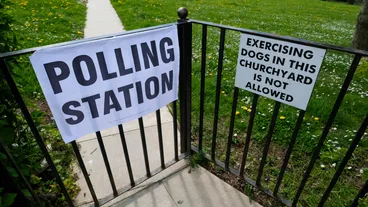
Starting in the early hours of tomorrow morning, we shall be bombarded with analyses of the local election results. Are the gains and losses for each party above, below or on a par with expectations? Is Ed Miliband on course to become Prime Minister? Has UKIP overtaken the Liberal Democrats?