Dead-set on proving to their constituents that Ukip are actually fluffy toys when it comes to Europe, Despite Cameron's commitment to a referendum in the next Parliament, Ukip would die. Excuse my Belgian-French, but this is crap.
As a former Conservative minister warns of the 'aggressive homosexual community', a savage beating of a gay couple in a South London park shows us just how much further we need to go in creating an equal and tolerant society.
In sticking to steadfast opposition Miliband won't necessarily look strong and defiant, to many he will look weak and scared. There is a substantial demand for a referendum, and has been for some time.
Now the 'send in the clowns' shtick has gone stale, it's now time to send in the 'political has-beens'. If either Michael Portillo or Alan Johnson remained on the front-line of British politics, their respective parties would be far more likely to win the next general election.
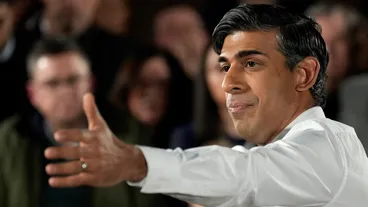
Some people would say that this is a superficial issue of perception, that standing up in the streets and talking to people is merely a device to make you look like you belong to the grassroots.
As you may well know, last week Labour leader, Ed Miliband, announced that if Labour were to form the next government they would encourage businesses to pay employees the Living Wage (approximately £8.55) by cutting business rates or tax levels for those that do. As someone who employees 20-30 people (some on PAYE and others freelance) at the London Jewellery School, I whole-heartedly welcome these plans.
Each successive government of course blames the last for the financial mess it inherited but the truth is that the blame game pales in respect to apportioning blame for the 2008 global financial disaster.
I have a theory about why the anger has gone out of mainstream politics -- and it revolves around television. The telly-box is what the media studies people call a "cool medium" -- it is much kinder to soft-spoken, reasonable people with an ample store of pithy sound-bites than to tub-thumping ideologues who could make themselves heard in the far corners of Trafalgar Square without the aid of a microphone.
My, we are a gloomy lot. Last week, I discussed the possible impact of a triple-dip recession. Last Thursday's GDP figures suggest that Britain's economy has so far avoided this fate. However, it is also clear that the government's hopes of steady growth of 2 - 3% a year have yet to be realised. And YouGov research for the Resolution Foundation finds that five years of economic troubles have left a deep mark on public opinion.
The politicians' draft Royal Charter is supposed to be a wizard wheeze to entrench "voluntary independent self-regulation", Judge Leveson's Orwellian oxymoron, without crossing David Cameron's Rubicon into statutory regulation. Of course, it does nothing of the kind. It is state regulation by any other name.
The empowerment of communities at a local level - Heseltine syndrome - is what the people want, and it's what the deprived communities in the Midlands and the North truly need. Let's hope this particular political virus is contagious.
An unprecedented triple-dip recession has been averted, but yesterday's lacklustre growth figures mean our economy is simply back to where it was six months ago. This continues the overall picture of a flatlining economy in Britain ever since George Osborne's last spending review. In fact, this is now the weakest recovery for over 100 years.
So as Bill bounces goofily round the globe, adored at every corner, Tony provokes and irritates whilst bewildering us with an effortless master class in realpolitik, something that I miss in British politics.
Now is the time for the Labour party to create a new discourse and move away from "the Reagan and Thatcher settlement" Ed Miliband knows that he cannot sit back and watch the Coalition unravel, but if he is to win the next election, he has to set out moral and ideological terms for the future of the party.
I am 100 per cent convinced that Ed Miliband has courage, conviction and passion like no prime minister, since Margaret Thatcher left Downing Street. In that sense, he is her heir.
Critics of 'big government' talk as if it's beyond question that the state's involvement with our lives is a bad thing.